
H1N1 influenza, commonly known as swine flu, is a viral respiratory infection that can significantly affect people with pre-existing lung conditions. Individuals with asthma are particularly vulnerable viral infections increase airway inflammation, making symptoms harder to control. Recognising the connection early helps patients act before things escalate.
Dr. Manu Madan, Pulmonologist in Noida, says:
“Respiratory infections such as H1N1 can worsen airway inflammation and trigger asthma symptoms. Early medical attention is important, especially for individuals whose asthma is not well controlled.”
What Causes an Asthma Attack During H1N1 Infection?
The H1N1 virus irritates the airway lining, and that irritation shows up as inflammation almost immediately. In someone whose airways already overreact — which is exactly what happens in asthma — this extra inflammation tips the balance. Muscles around the airway tighten, passages narrow, and breathing gets harder.
Stage 1: H1N1 Infection
A virus with nowhere quiet to land
The H1N1 virus settles into the respiratory tract the way any flu virus does — nose, throat, and airway lining all take the hit. For someone with asthma, it’s the first domino.
Stage 2: Airway Inflammation
The body’s defence turns into the problem
The immune system responds to the virus with inflammation — normal and necessary. But in airways already prone to asthma, that inflammation doesn’t stay contained.
Stage 3: Increased Sensitivity
Airways on a hair trigger
Inflamed airways become hyper-reactive. Things that wouldn’t normally bother the lungs — cold air, a deep breath, even talking can now set off a reaction that can linger for days.
Stage 4: Symptoms
Where it becomes an asthma attack
The muscles around the airway tighten and the passage narrows. Wheezing, coughing, chest tightness, and breathlessness follow — sometimes even while flu symptoms still feel mild.
Not everyone with asthma who catches H1N1 has an attack. Many get through it fine, especially if their asthma was already well managed. Staying on prescribed asthma treatment instead of pausing it “because you feel fine” makes a real difference.
Quick Note: A lingering cough or mild wheeze for a week or two after the fever clears is common and usually just the airways settling.
What Symptoms Can Occur When H1N1 Triggers Asthma?
Flu and asthma symptoms overlap just enough to cause confusion. H1N1 brings fever, chills, body aches, fatigue, sore throat, and a cough. Asthma flaring up looks different — wheezing, chest tightness, breathlessness, and needing the reliever inhaler more often.
Fever & Chills
Body Aches
Fatigue & Headache
Wheezing
Chest Tightness
Increased Reliever Use
A cough alone doesn’t mean much — almost everyone with flu coughs. What matters is what comes with it. Wheeze, chest tightness, or a persistent cough that won’t settle deserves attention, not a “just the flu” shrug. Anyone with COPD or another chronic lung condition tends to feel this overlap harder.
Quick Note: Young children and older adults with asthma are watched more closely during flu illness, since both groups face higher risk regardless of asthma status.
When Should You Consult a Doctor for H1N1-Related Asthma Symptoms?
Think of it as two tiers: worth a call, or worth an emergency visit. Call your doctor promptly if wheezing is increasing, reliever use is climbing, sleep is disrupted, or symptoms simply aren’t improving.
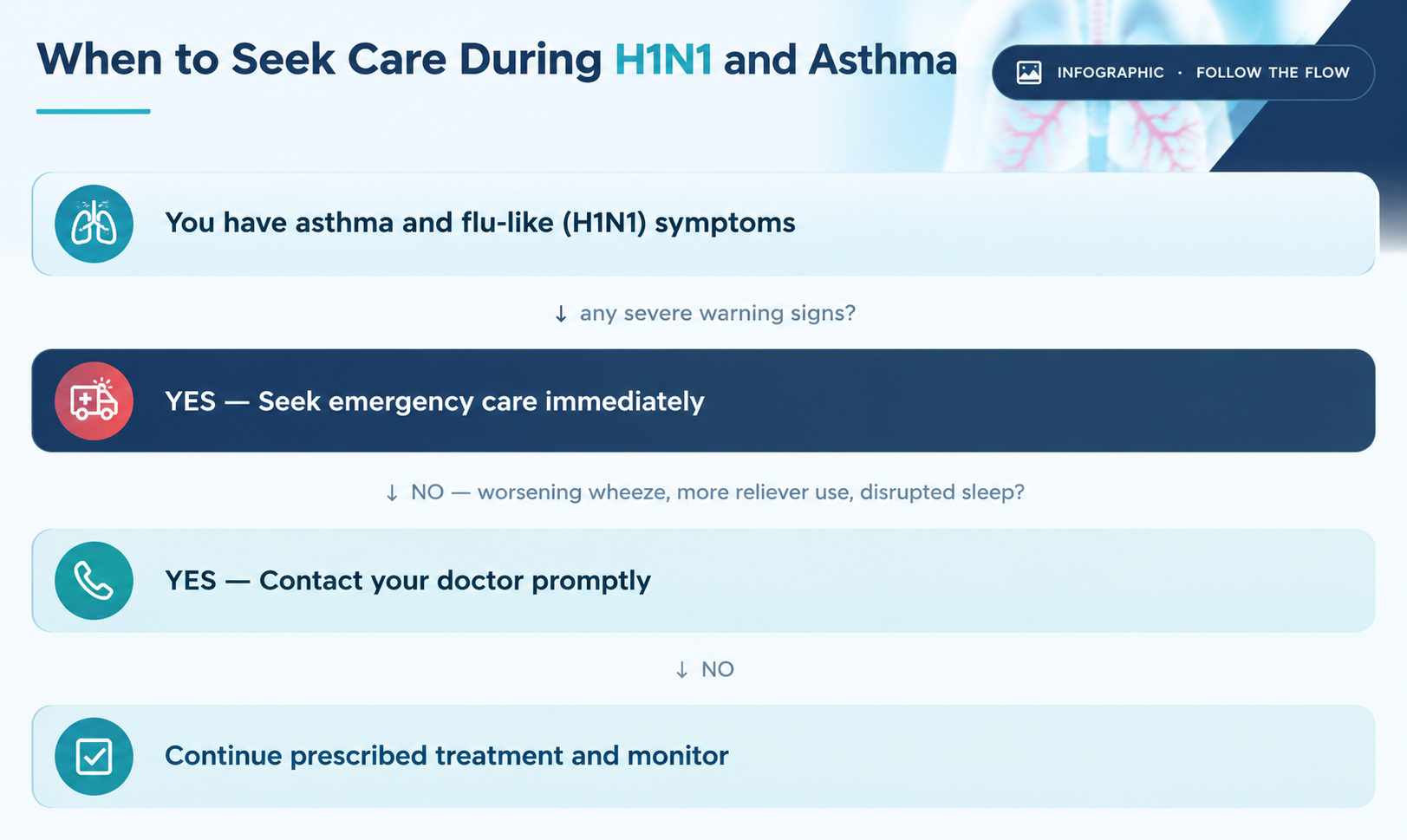
Some signs need emergency care immediately severe breathing difficulty, worsening breathlessness, trouble speaking in full sentences, blue or grey lips, confusion, extreme weakness, severe chest pain, or poor response to rescue treatment. An asthma action plan and annual flu vaccination both lower the odds of reaching that point. More on Dr. Madan’s approach to respiratory care is on his profile page.