
After a Stage 4 diagnosis, most people want to know one thing: how much time is left. There’s no clean answer, and the averages online won’t tell you much about your own case. Stage 4, or very severe COPD, means lung function has fallen below 30 percent of normal. Research puts median survival here at a few years, but that figure blends people who kept smoking with those who quit, and frequent hospital cases with those who rarely flare up. Many patients live well beyond it. What shifts the odds is largely in your hands: stopping smoking, staying on treatment, keeping active, and treating flare-ups early. Stage 4 COPD can’t be cured, but it can be managed, and good management changes both how long you live and how well.
According to Dr. Manu Madan, a senior Consultant and Pulmonologist in Noida,
“A Stage 4 diagnosis is not a countdown. The patients who do best are the ones who quit smoking, use their inhalers and oxygen the way they’re supposed to, and treat every flare-up early. That’s what shapes the outcome, not the stage number by itself.”
A Stage 4 diagnosis doesn’t have to mean facing it alone. Book a consultation today with one of the leading pulmonologist in Noida and get a care plan that fits your life.
Factors That Influence Life Expectancy in Stage 4 COPD
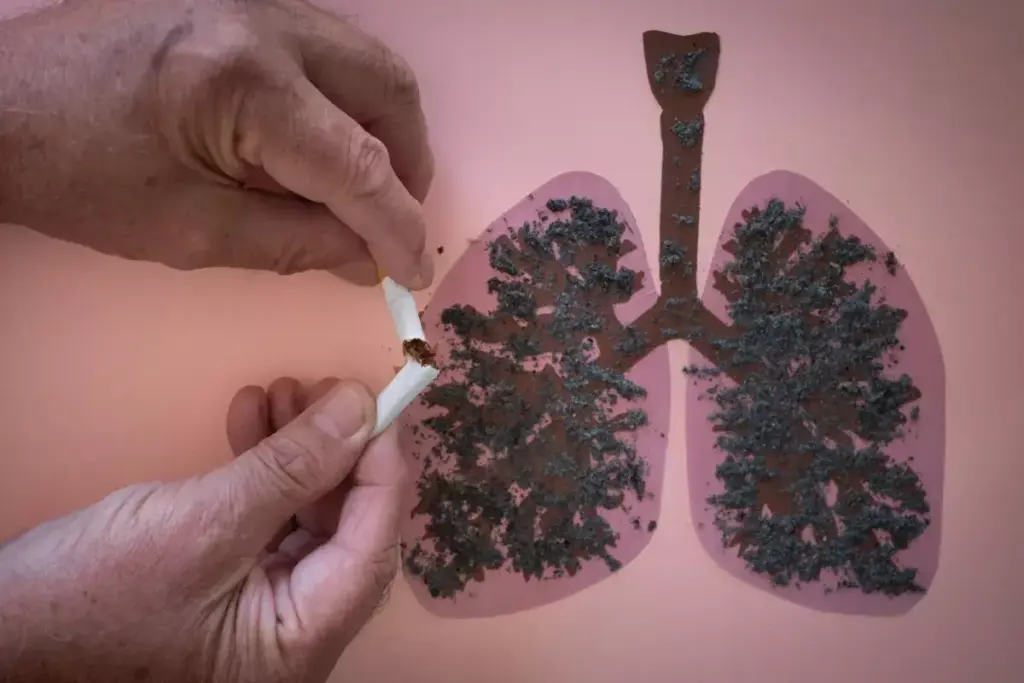
Two people can sit at the same stage and have very different outlooks. A handful of things explain most of that gap, and the good news is you can change several of them.
What makes the biggest difference:
Whether you still smoke
Quitting slows the decline more than anything else, no matter how late you do it. Keep smoking and the clock speeds up.
How often you flare up
A bad exacerbation, especially one that puts you in hospital, can knock down your lung function for good. Fewer flare-ups, better outlook.
Your oxygen levels
When blood oxygen stays low, the heart pays for it over time. Home oxygen, used as prescribed, actually helps people live longer, and structuredCOPD treatment that includes rehab keeps you steadier day to day.
Other conditions you're carrying
Heart disease, diabetes, or high pressure in the lung arteries all change the picture and have to be managed together.
Your weight
Being very underweight is linked to worse outcomes. Holding on to muscle matters more than people realise.
Fewer chest infections
Pulmonary rehab isn’t just about feeling better day to day. It’s tied to longer survival.
Doctors often use something called the BODE index, which looks at weight, airflow, breathlessness, and how far you can walk. It gives a more realistic picture than a lung function number on its own.
Symptoms of Advanced Stage 4 COPD
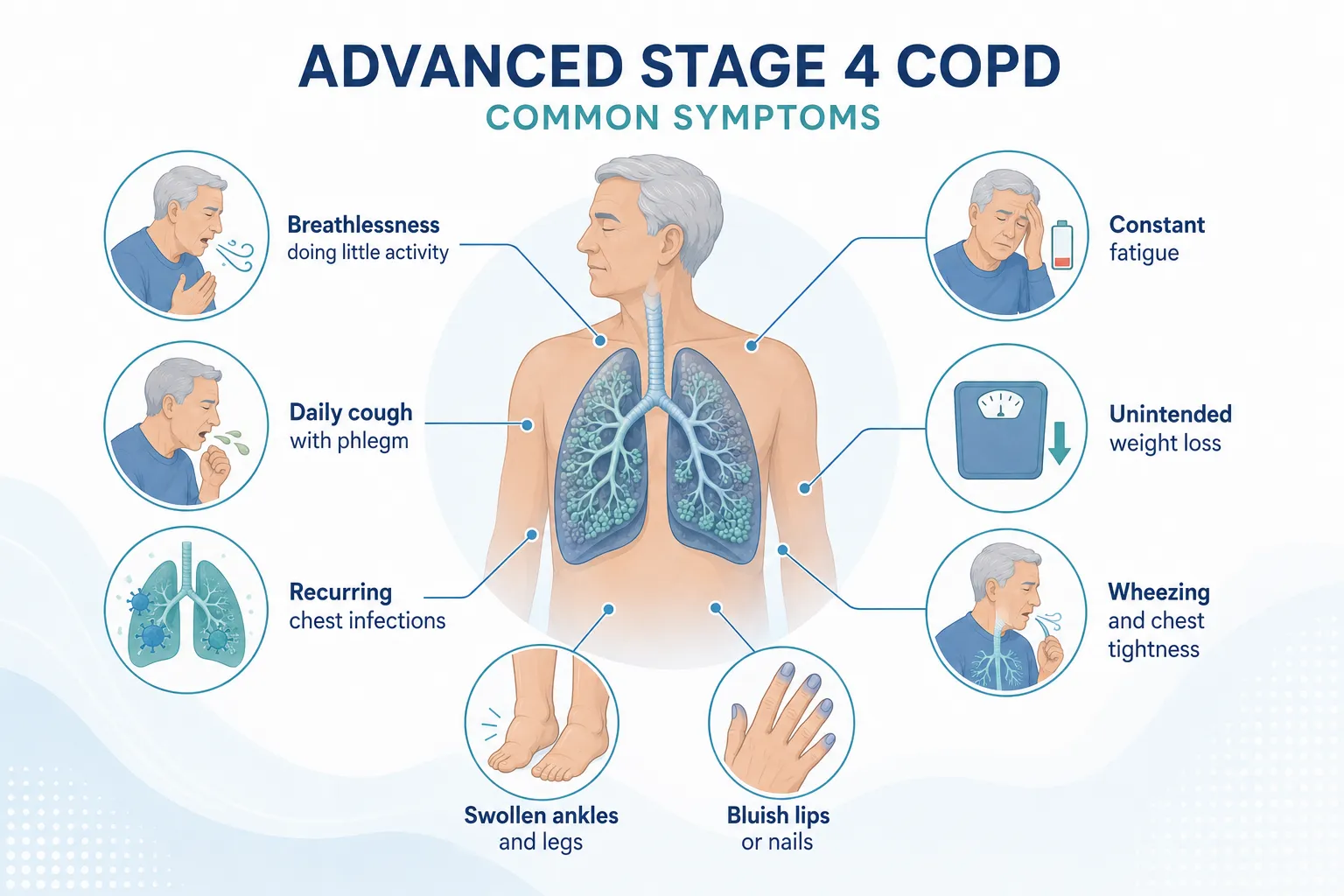
By this stage, symptoms are with you most of the time and they get in the way of ordinary life. Keeping track of them helps you and your doctor judge how well things are controlled and when treatment needs to change.
What Stage 4 usually looks like:
- Breathless doing almost nothing:Getting dressed, talking, walking to the next room. Small efforts leave you winded.
- A daily cough with phlegm:Most days, often thicker or a different colour when a flare-up is coming. When it lingers or shifts in a way that’s new for you, it’s worth getting looked at.
- Chest infections that keep coming back:Bronchitis or pneumonia that hits more often and takes longer to shake each time.
- Wheezing and a tight chest:A whistle when you breathe and a constant sense of pressure.
- Wiped out all the time:Breathing itself takes real effort, so there’s little left for anything else.
- Losing weight without trying:The body burns extra energy just to breathe, and muscle wastes.
- Swollen ankles or legs:A sign the heart is straining under the lungs. Worth a call to your doctor.
- A bluish tinge to your lips or nails:That’s low oxygen, and it needs seeing to quickly.
If your symptoms are creeping worse or something new shows up, it usually means the disease needs closer management. It doesn’t automatically mean decline is set in stone.
Breathlessness getting worse, or flare-ups piling up? Book a consultation today with one of the leading pulmonologists in Noida and get a proper evaluation and care plan.
Risks and Complications Associated With Stage 4 COPD
Advanced COPD doesn’t stay in the lungs. Knowing what to watch for lets your care team step in early, before a problem turns into an emergency.
Here’s how the main complications stack up:
| Complication | What Happens | Why It Matters |
| Respiratory failure | Lungs can’t hold safe oxygen levels or clear carbon dioxide | The most serious risk; may need oxygen or a ventilator |
| Cor pulmonale | The right side of the heart strains and enlarges | Brings on leg swelling and fluid buildup; treat it promptly |
| Frequent exacerbations | Symptoms suddenly get much worse | Each episode can cost you lung function for good |
| Pulmonary hypertension | Pressure rises in the lung arteries | Adds strain on the heart, worsens breathlessness |
| Recurrent infections | Pneumonia and bronchitis that keep returning | A common trigger for flare-ups and hospital stays |
| Depression and anxiety | The mental toll of not being able to breathe freely | Easy to miss, but treatable, and worth raising |
Most of these can be prevented or kept in check with vaccines, treating infections early, oxygen where it’s needed, and regular follow-up. The whole point is to catch trouble before it snowballs.
Managing advanced COPD and worried about complications? Book a consultation today with one of the leading pulmonologists in Noida for a clear long-term care plan built around you.
When Should You Consult a Doctor Immediately?
Some symptoms can’t wait for the next scheduled visit. With Stage 4 COPD, knowing which ones are emergencies can save a life.
Get help right away if you have:
Severe breathlessness that won't settle with your usual inhaler or with rest.
Blue or grey lips, face, or nails, which points to dangerously low oxygen.
Confusion or drowsiness you can't shake off, which can mean carbon dioxide is building up.
Chest pain, or a heartbeat that's racing or irregular.
Coughing up blood, or a sudden change in your mucus along with fever.
Ankles, legs, or belly swelling up fast.
A flare-up clearly worse than your usual ones that isn't responding to your rescue plan.
Patients across Noida and Delhi come to Dr. Manu Madan for advanced COPD care because he manages severe disease closely, works hard to keep flare-ups at bay, and builds a long-term plan around each person. When a diagnosis needs a closer look at the airways, a bronchoscopy can pinpoint what’s driving symptoms, alongside oxygen therapy, pulmonary rehab, and the support that goes with it.
Frequently Asked Questions
What is the life expectancy for Stage 4 COPD?
There’s no single number. Studies put median survival at very severe COPD at a few years, but it varies a lot. Many people live well beyond that, especially if they quit smoking, stick with treatment, and keep flare-ups to a minimum.
Can Stage 4 COPD improve or be reversed?
The lung damage itself can’t be undone, but how you feel can improve a great deal. Quitting smoking, inhalers, oxygen, and pulmonary rehab all slow the decline and make daily life easier.
Does using oxygen mean the end is near?
No. Home oxygen is a treatment, and when your levels are low it can actually help you live longer and feel better. It’s about living well, not giving up.
How can I slow down Stage 4 COPD?
Stop smoking completely, take your medications exactly as prescribed, stay active through pulmonary rehab, keep up with vaccines, and treat every flare-up early before it gets worse.
When should someone with Stage 4 COPD go to hospital?
Go straight away for severe breathlessness that won’t ease, blue lips or face, confusion or drowsiness, chest pain, or a flare-up much worse than your usual. Those need immediate care.