
What Symptoms Can Occur Along With a Lingering Cough?
On its own, this kind of cough tends to be dry, or brings up nothing more than clear or light mucus — more of a persistent tickle than anything that feels seriously wrong. Talking too much, stepping into cold air, laughing, or even light exercise can set it off, and it has an odd habit of getting louder at night, well after everything else has quieted down.
Dry, Tickly Cough
Nighttime Flare-ups
Coughing often gets more noticeable at night, once the day’s distractions and upright posture aren’t masking it.
Throat Irritation
Cold Air & Exercise Sensitivity
When Does a Cough After Influenza Become a Concern?
Normal Recovery
Cough gradually easing
Fewer coughing fits and less intensity week over week.
Dry or light mucus
Worse at night or with cold air
Red Flags
Fever returns
Thick, coloured, or bloody mucus
Chest pain or breathlessness
A fever that comes back after it had gone, mucus that turns thick and yellow or green, blood when you cough, chest pain, or breathlessness that wasn’t part of the picture before — these are the moments to stop assuming it’s just flu residue. People managing asthma or COPD usually pick up on these shifts faster, simply because their airways don’t have much slack to begin with.
How Can a Lingering Cough After Influenza Be Managed?
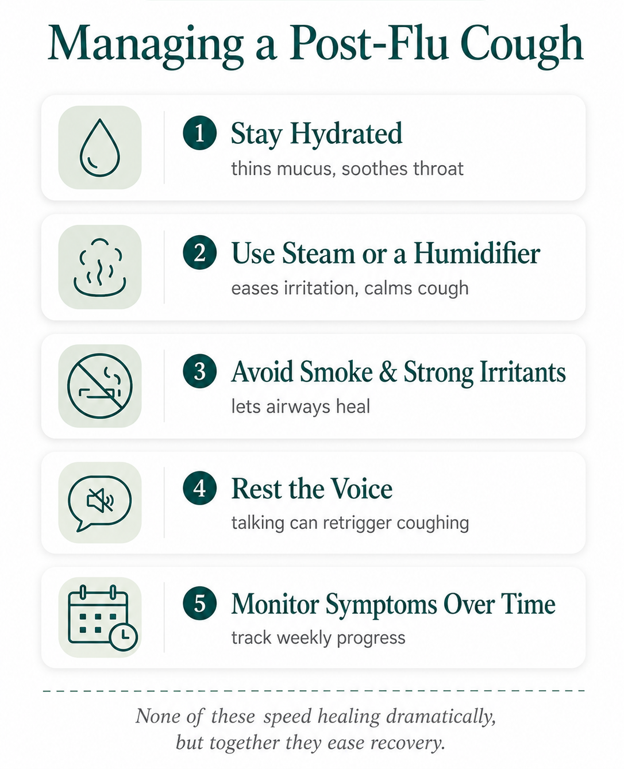
There isn’t a medication that specifically cures a post-viral cough, and antibiotics won’t make a dent since there’s no bacteria involved. What actually helps is more basic than most people expect — time, staying hydrated, and letting the airways calm down on their own pace. Warm fluids and steam can take the edge off throat irritation while that happens.
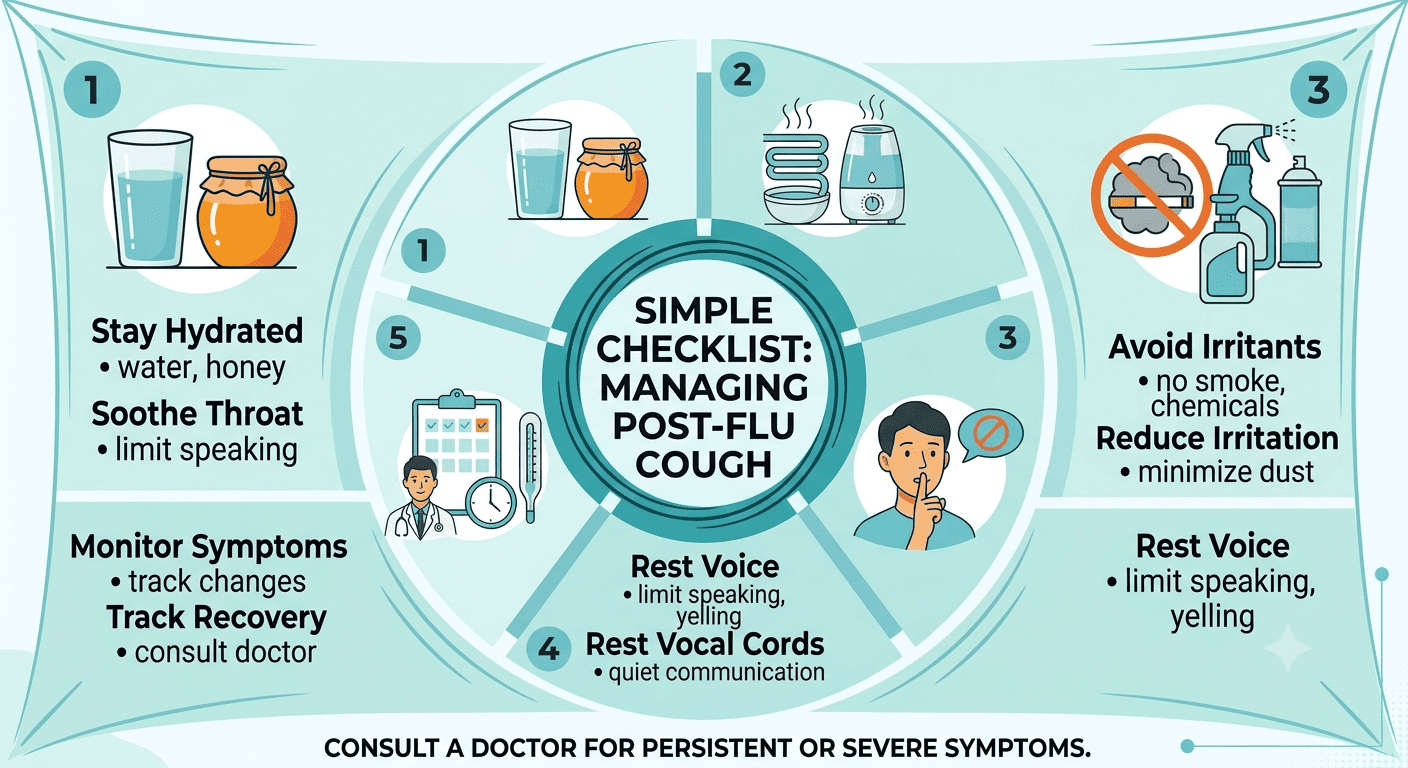
Steering clear of smoke, strong fumes, and anything else that irritates the airways gives them a fair shot at recovering without extra provocation. If you’re already on asthma treatment, this isn’t the moment to ease off it — a flu-related cough layered on top of asthma is exactly when consistency matters most.
When Should You Consult a Doctor for a Cough After Influenza?
A cough that is progressing very slowly does not usually warrant a trip to the doctor. However, if the cough is taking longer than three or four weeks to get better, or has come and gone repeatedly, then the situation is completely different and needs to be examined by a professional.
Coughing up blood, chest pain, unexplained weight loss, night sweats, or breathlessness while at rest are signs that call for prompt attention rather than more patience. A persistent cough that doesn’t fit the usual healing pattern sometimes needs a closer look — occasionally imaging, occasionally a bronchoscopy — just to rule out something other than ordinary post-viral irritation. Dr. Madan’s approach to evaluating persistent respiratory symptoms is outlined further on his profile page.
Frequently Asked Questions
The cough will stay around for how many days?
A cough that lasts after other flu symptoms have gone away?
After the flu is it contagious?
When is a cough after the flu a good idea to treat?
Are there antibiotics to cure an on-going after flu cough?
Trusted Medical Sources
Medical Disclaimer
This article is intended for general educational purposes and does not replace an individual medical consultation, diagnosis, or treatment plan. Anyone with a persistent or worsening cough after influenza should seek medical assessment based on their symptoms and individual risk factors. Please consult a qualified healthcare professional for advice specific to your situation.
Takeaway
A cough that lingers for a few weeks after the flu is usually just the airways taking their time to heal, not a sign that something’s wrong. Paying attention to how it’s changing, rather than fixating on how long it’s lasted, is the better way to tell whether it’s still normal recovery or something worth a doctor’s opinion.