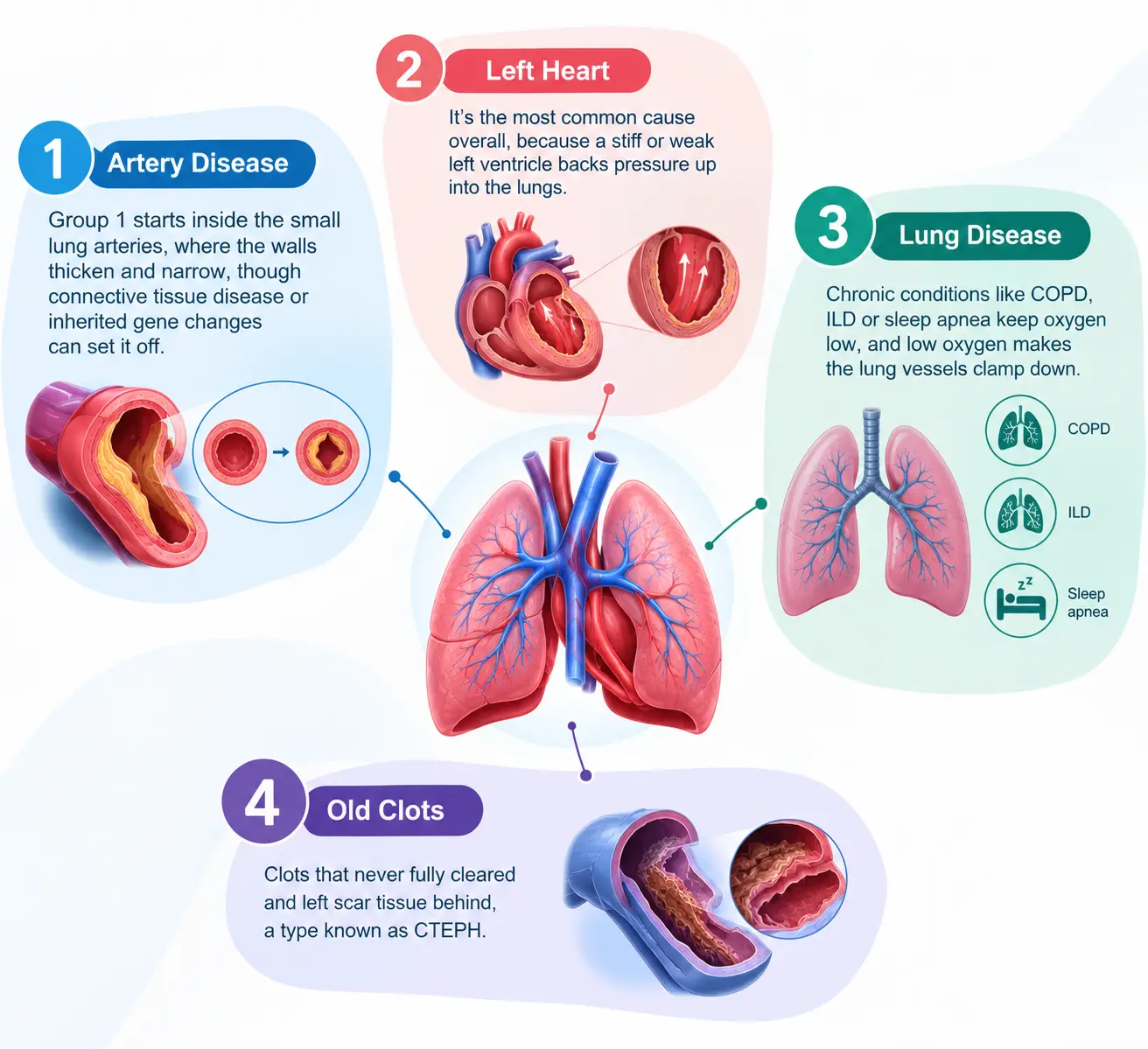
Pulmonary hypertension is a condition where blood pressure in the lung arteries stays above 20 mmHg at rest, forcing the right side of the heart to work harder. It’s divided into five groups by cause: lung artery disease, left heart disease, chronic lung disease, old blood clots and mixed triggers. Left untreated, it can lead to right heart failure.
According to Dr. Manu Madan, a leading Pulmonologist in Noida, “Breathlessness that keeps worsening on exertion is rarely just poor fitness, and catching pulmonary hypertension early changes how well treatment works.”
Getting breathless on stairs you used to climb easily?
What Causes Pulmonary Hypertension?
Because chronic lung disease drives so many cases, proper COPD treatment can take some pressure off the pulmonary vessels too.
How Is Pulmonary Hypertension Treated?
Treatment follows the type, and honestly, pinning down the type takes more work than most patients expect.
- Confirmation: Echocardiography screens for it, but only right heart catheterization confirms the pressure reading and shows which group applies.
- Targeted Drugs: PDE5 inhibitors, endothelin receptor antagonists and prostacyclin pathway drugs relax and widen the narrowed arteries in group 1 disease.
- Supportive Care: Oxygen when levels dip, diuretics when the ankles swell, and blood thinners only in selected patients.
- Procedures: Pulmonary endarterectomy can remove chronic clots surgically, balloon angioplasty is an option when surgery isn’t, and lung transplant is considered in advanced disease.
And for patients whose oxygen drops, home oxygen therapy often eases daily breathlessness.
Why Choose Dr. Manu Madan?
Dr. Manu Madan holds an MBBS from Maulana Azad Medical College, an MD from Vallabhbhai Patel Chest Institute and a DM from AIIMS New Delhi, with over 15 years of clinical experience and 40+ publications. As Senior Consultant and Lead of Respiratory and Sleep Medicine at Medanta Hospital, he manages lung conditions such as ILD treatment that often sit behind raised lung pressures.
Patients get a confirmed diagnosis first, a plan matched to their pulmonary hypertension group, and follow-up that tracks walking ability and oxygen levels instead of guesswork. Don’t wait until the stairs get harder.
Frequently Asked Questions
What are the early symptoms of pulmonary hypertension?
Breathlessness on exertion, fatigue, chest pressure, dizziness and ankle swelling are common early signs.
Can pulmonary hypertension be cured?
Most types can’t be cured, but chronic clot-related disease can sometimes be cured surgically.
How is pulmonary hypertension diagnosed?
Echocardiography screens, and right heart catheterization confirms the diagnosis by measuring pressure directly.
Is pulmonary hypertension the same as high blood pressure?
No, it affects only the lung arteries and isn’t detected by arm blood pressure readings.